 Troubleshooter
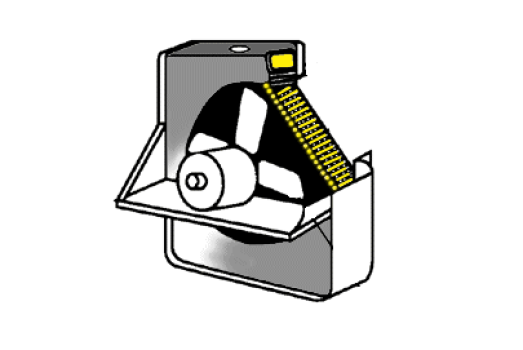
Accessories used for controlling fluid temperature
Operation of hydraulic system in the warmer or colder atmosphere an increase or decrease of temperature is a constant which has to be kept in mind.
Heating the fluid can be necessary in some applications in cold countries and winter. Before installation is put into the operation the fluid need to be heated to working temperature. Heaters are use in this case.
Maintenance an important job to eliminate malfunction in the hydraulic system.
Important Note About Working Temperature
The working temperature is one of the key factors that give the efficiency of hydraulic system. If the temperature is too low the flow resistance is increase, practically the fluid becomes ticker and sluggish and has a negative effect on mechanical output and the pump experienced suction difficulties. If the temperature is too high leaks in the hydraulic system occur that mean losses and wear are greater.
Heat created in the hydraulic circuit by pumps, valves, actuators and pipes is transported by the fluid to tank. The heat returned to the tank is partly removed to the outside through the walls of the tank. If the radiation surfaces are not sufficient, additional heat exchanger (coolers) have to include in the design of the system, so that the system and fluid does not overheat.
There are two types: air cooler and water cooler.
I will present Air Cooler
The fluid is going through a cooler thru which a forced cooling air blows by a ventilator driven by an electric motor. The fluid is pumped via tubes to which fins or cooling elements are attached. I used to name it radiator. To dissipate the heat air is blow over the tubes and cooling elements by a fan. A thermostat set to protect the hydraulic system against overheating by energizing the electric motor fan when temperature reaches the set point.
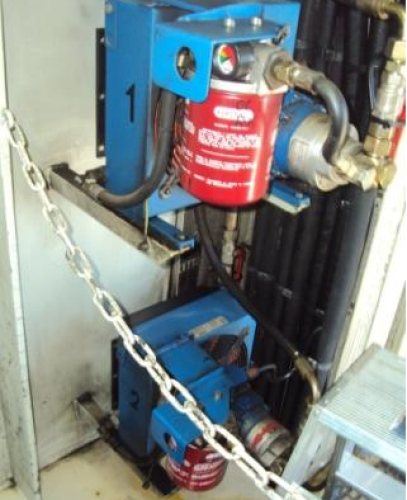
Main components of the air cooler
- Cooling elements or radiator
- Electric motor
- Fan
More information about cooler as maintenance and the use of them in will presented next.