 Troubleshooter
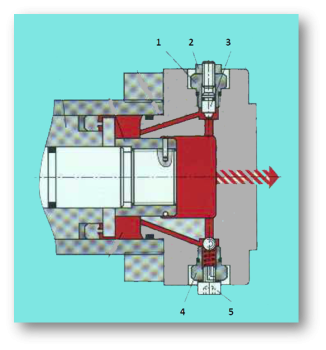
The cushioning cylinder is utilize to slow down the piston as it approaches its end positions, as well as to prevent it from striking the cover with great force during extension and retraction. Depending on the application, is install at one end only or at both ends. Additionally, hydraulic cushioning can be either non-adjustable or adjustable.
Cushioning cylinder
Adjustable cushioning cylinder comprises: cushioning bush, adjustable throttle valve (2) and a check valve(4).
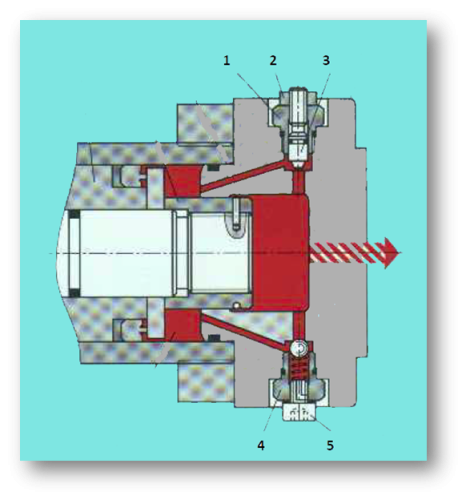
The piston is place into the piston rod by means of a cushioning bush.
When the cylinder piston is moving either extend or retract oil is push back through the main channel and connection port back to the tank.
When the tapered cushioning bush enters the bore in cylinder cap the opening of the fluid leaving the piston chamber reduces until it completely close off. Subsequently the fluid from the piston chamber drains via bore and the adjustable throttle valve. The cushioning effect or the rate of deceleration is sets at the throttle valve. The smaller it is the opening to flow, the larger is the effect of cushioning at the end positions. So the pressure increases and slowing the piston allowing some of the pump flow to go through the relief valve.
In the picture above the throttle valve comprise of a throttle screw (3) and lock nut (2). The design of the valve stops the throttle screw to be unscrewed when screw end position reached by means of a lock nut.
Refresh your memory by checking What is a hydraulic cylinder
Check valve with bleed screw
Check valve (4) is use to help the cylinder extend from its starting position. Therefore the throttling point is by-pass when the cylinder is extend.
Important note
Any air in the cylinder may be remove by the bleed screw (5). In cylinders without cushioning the bleed screw is include as standard.
Controlled deceleration
This braking or control deceleration occurs because of the last remains of oil or air is trap and can only escape slowly. When damping starts all effective energies – the force produce by moving mass and stroke velocity – should not exceed the maximum working capability of the damping. Furthermore the energy use for deceleration is transform into heat in the cushioning valve, which works by throttling the fluid flow.
- The piston is fixed onto the piston rod by means of a cushioning bush;
- The cushioning effect is set at the throttle valve;
- Adjustments of the throttle valve determine the rate of deceleration;
- The check valve enables the cylinder pistons extend from its starting position.
The post is filled under Troubleshooter Chapter/Tab – Cushioning page